Month: August 2025

  • How to Start a Business in the AI Era: The Practical Guide to Building on Existing Ecosystems

    Introduction: A New Industrial Revolution

    We are living through one of the fastest technology waves in human history.

    It took decades for electricity to reach mass adoption.
    It took years for the internet to reshape industries.
    It has taken months for large language models (LLMs) like OpenAI’s GPT, Google’s Gemini, Anthropic’s Claude, and DeepSeek to become household names.

    Most people feel the same instinct: this is so powerful, I need to build something entirely new on top of it. Startups rush to create “the next ChatGPT,” or an “AI agent that replaces all jobs.” Investors throw billions into frontier AI labs—the companies building the models themselves.

    But here’s the truth: 99% of businesses don’t need to build new frontier models. They don’t even need to reimagine the entire world.

    The real opportunity lies in a quieter but far more profitable strategy: integrating AI into the systems we already know and use every day.

    The businesses that win in the AI era won’t be the ones shouting the loudest about building “the next AGI.” They’ll be the ones who take this magic, and apply it inside the old workflows that actually run the economy.

    This guide will show you how.


    Part 1: The Landscape of AI Today

    The Hype: Frontier AI

    The media cycle revolves around a handful of names:

    • OpenAI (GPT-4o, ChatGPT)
    • Google DeepMind / Gemini
    • Anthropic (Claude)
    • DeepSeek (China’s open competitor)
    • Meta (Llama)

    These are “frontier AI companies” — they train and scale massive foundation models. The scale is breathtaking: tens of thousands of GPUs, billions in energy and data costs, armies of researchers.

    It’s tempting to believe the only way to succeed in the AI era is to join this arms race. But building a new frontier LLM is like trying to start your own electricity grid in 1900. Most people don’t need to build the grid. They need to build the light bulbs, refrigerators, factories, and trains that run on the grid.

    The Reality: Business Ecosystems Are Already Here

    The vast majority of businesses still run on:

    • Excel spreadsheets & ERPs
    • Email & Slack/Teams
    • CRM systems like Salesforce or HubSpot
    • Accounting software like QuickBooks, NetSuite, Xero
    • HR tools like Workday, BambooHR
    • Industry-specific platforms (for law, medicine, logistics, etc.)

    These are the workhorses of the global economy. They’ve been around for years, and companies have invested billions in customizing them.

    👉 The real opportunity is not replacing them, but layering AI on top of them.


    Part 2: The Core Thesis — Don’t Build a New World, Augment the Old

    AI is not a clean slate revolution. It is a layering revolution.

    Think of electricity again:

    • Edison didn’t need to build a new city to make electricity useful. He built the light bulb.
    • Westinghouse didn’t need to reinvent transportation; he electrified trains.
    • Businesses didn’t abandon paper processes overnight; they gradually adopted typewriters, then computers, then email.

    The same is happening with AI:

    • Lawyers don’t need a new “AI justice system.” They need AI that drafts contracts in Word and checks case law in LexisNexis.
    • Accountants don’t need a “self-aware AGI CFO.” They need AI that reconciles spreadsheets in Excel.
    • Retailers don’t need an “AI-only commerce platform.” They need AI that integrates into Shopify and automates support emails.

    👉 The winning strategy: Apply frontier AI inside the workflows that businesses already depend on.


    Part 3: Where the Real AI Business Opportunities Are

    Let’s look at the sectors where AI is already delivering value when embedded into existing tools:

    1. Customer Service & Sales

    • AI agents integrated into Zendesk, Intercom, HubSpot.
    • Automated but human-like customer responses.
    • Sales email personalization at scale.

    2. Finance & Accounting

    • AI reconciles transactions in QuickBooks/Xero.
    • Automated report generation.
    • Risk detection & fraud analysis.

    3. HR & Recruiting

    • AI resume screening inside Workday/BambooHR.
    • Personalized learning & development programs.
    • Employee chatbots for policy/benefits questions.

    4. Law & Compliance

    • AI summarizing case law inside LexisNexis/Clio.
    • Drafting legal contracts in Microsoft Word.
    • Compliance monitoring for regulated industries.

    5. Healthcare

    • AI transcription integrated into Epic EHR systems.
    • Radiology image analysis assisting doctors.
    • Patient support chatbots reducing admin work.

    6. Supply Chain & Logistics

    • AI forecasting demand in SAP/Oracle ERPs.
    • Optimizing delivery routes.
    • Detecting fraud in invoices and shipping logs.

    👉 Each of these is a business opportunity not by building a frontier model, but by embedding existing LLMs into legacy systems.


    Part 4: How to Start an AI Business the Right Way

    Here’s the playbook for entrepreneurs in the AI era:

    Step 1: Pick Your Ecosystem

    Don’t start with “I want to build an AI tool.” Start with:

    • Which ecosystem do I already understand?
    • Which workflows are painful in that ecosystem?
    • How can AI plug in to solve them?

    Example: If you know real estate, build AI tools for property valuation and lead management inside Salesforce.

    Step 2: Choose Your Frontier AI Partner

    You don’t need to train models. Use:

    • OpenAI (GPT-4o) for general text/voice.
    • Anthropic (Claude) for reasoning.
    • Google Gemini for multi-modal and search integration.
    • DeepSeek/Meta open-source for private deployments.

    Step 3: Build Wrappers & Workflows

    • Connect LLM APIs to existing software (CRM, ERP, HR systems).
    • Automate repetitive tasks.
    • Use AI as an assistant, not replacement.

    Step 4: Prove ROI

    Businesses don’t buy “magic.” They buy efficiency.

    • Show time saved.
    • Show cost reduced.
    • Show accuracy improved.

    Step 5: Scale in Niches

    AI businesses that succeed don’t try to be “AI for everyone.”

    • Be “AI for accountants in small law firms.”
    • Be “AI for HR in mid-sized hospitals.”
    • Be “AI for logistics in e-commerce.”

    Part 5: Case Studies

    Case Study 1: AI in Law

    Startups like Harvey AI didn’t build a frontier LLM. They embedded GPT into legal workflows, integrated with firms’ document systems, and delivered contract drafting + case summarization. Law firms save hours per client.

    Case Study 2: AI in Sales

    Tools like Outreach + AI email generation boosted outbound sales by integrating GPT into existing CRMs. They didn’t replace Salesforce—they supercharged it.

    Case Study 3: AI in Healthcare

    Nuance (acquired by Microsoft) integrated speech-to-text AI into EHR systems. Doctors no longer spend hours typing notes—AI transcribes and structures automatically.


    Part 6: Mistakes Founders Make in the AI Era

    1. Trying to Build Another ChatGPT – Competing with trillion-dollar labs is suicide.
    2. Ignoring the Ecosystem – A standalone tool rarely survives. Businesses want AI inside their stack.
    3. Over-Automation – Humans don’t want to be replaced, they want better tools.
    4. No ROI Proof – “AI is cool” isn’t a pitch. “AI saves $300k/year” is.

    Part 7: The Future of AI Entrepreneurship

    We are still early. Over the next 5–10 years:

    • AI will become invisible infrastructure (like electricity).
    • Winners will be those who integrate seamlessly.
    • Frontier AI will remain consolidated, but applied AI will explode into thousands of vertical niches.

    The question isn’t “Should I build in AI?” It’s:
    👉 “Which ecosystem do I know best, and how do I inject AI magic into it?”


    Conclusion: Stop Building Frontiers, Start Building Bridges

    The AI era is not about tearing down the old world. It’s about weaving intelligence into the one we already live in.

    You don’t need to train a billion-parameter model.
    You don’t need to reinvent the enterprise stack.
    You just need to pick an ecosystem, find the friction, and let AI do what it does best: amplify human ability inside proven workflows.

    History will remember the frontier labs like OpenAI, Gemini, and DeepSeek. But the wealth of the AI age will be built by entrepreneurs who figured out how to bring that power into accounting firms, hospitals, logistics companies, and schools.

    That is where the real business begins.
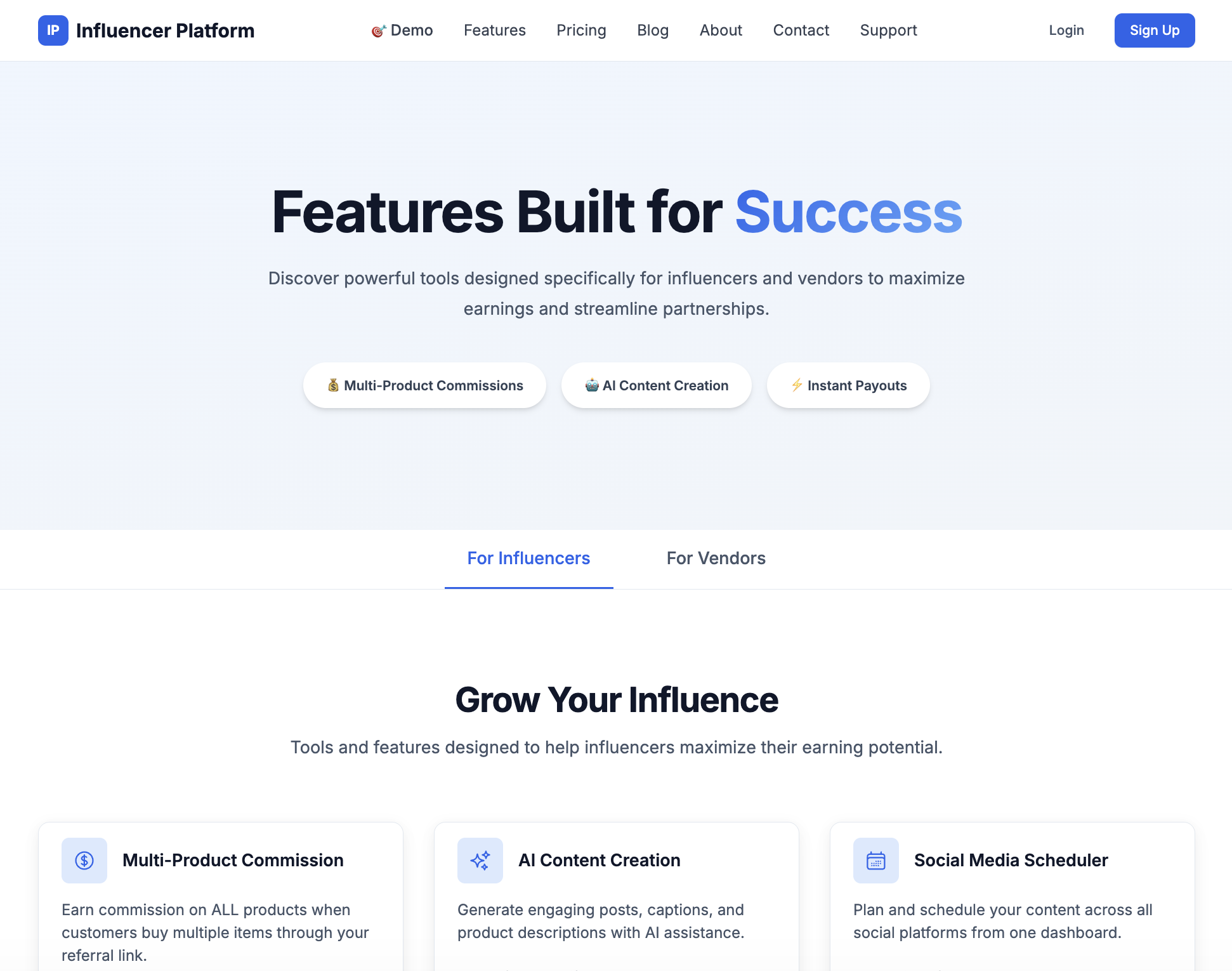
  • The $84B Influencer Marketing Industry Is Broken (And How AI Will Fix It)

    The $84B Influencer Marketing Industry Is Broken (And How AI Will Fix It)

    Introduction: A Market Too Big to Fail, Too Broken to Work

    In 2025, the creator economy is no longer niche—it is mainstream. With over $84 billion in annual spend, and projections exceeding $110 billion by 2027, influencer marketing has cemented itself as one of the most important growth channels of the digital age. Every brand, from DTC startups to Fortune 500 giants, is allocating bigger budgets to creators. Every CMO has influencer marketing in their toolkit. Every growth leader is betting that social-driven commerce is the future.

    And yet—the industry is still broken.

    Marketers continue to throw billions into campaigns without being able to answer the most fundamental questions:

    • Which influencers actually drive measurable ROI?
    • Which product SKUs are most impacted by creator content?
    • How do we scale influencer marketing with the same rigor as paid search or programmatic ads?

    Today’s influencer marketing platforms—many of them unicorns themselves—were built for a world that no longer exists. They are marketplaces, not performance engines. They track surface-level metrics (impressions, likes, comments), but fail at attribution, the single most important metric in performance marketing.

    This is the $50 billion black box problem—a gap so massive it represents both the industry’s greatest weakness and its greatest opportunity.

    The truth is stark: traditional influencer platforms are obsolete. The next wave will not be marketplaces. They will be AI-powered attribution ecosystems with plugin-based architectures that can adapt in real time, integrating seamlessly with commerce, content, and analytics stacks.

    And the startups that build this next generation? They won’t just win customers. They’ll redefine the category.


    The Industry’s Structural Inefficiencies

    Vanity Metrics and the ROI Mirage

    The current influencer marketing stack runs on vanity metrics. Platforms still measure success in terms of impressions, follower counts, engagement rates, and “brand lift.” But VCs and CMOs alike know the uncomfortable truth: none of these directly map to sales impact.

    According to a recent ANA (Association of National Advertisers) study, 73% of influencer campaigns cannot prove ROI beyond soft engagement metrics. This means tens of billions in ad spend is being justified on correlation, not causation.

    Why? Because influencer marketing is built on fragmented data:

    • Instagram, TikTok, and YouTube don’t expose reliable product-level sales data to third parties.
    • Affiliate links and promo codes capture only a fraction of true influence, missing cross-device, multi-touch, and multi-product interactions.
    • Platforms lack integration with the broader MarTech stack, making attribution impossible.

    The result: marketers overspend, creators underperform (at least on paper), and platforms can’t justify their value.

    Competitor Limitations

    Influencer marketplaces—whether legacy players or new SaaS entrants—share common limitations:

    1. Search, not strategy – They help brands find influencers, but not scale ROI-positive campaigns.
    2. Shallow analytics – They provide engagement dashboards, but no attribution engine.
    3. Closed architectures – They can’t plug into evolving e-commerce ecosystems, limiting scalability.

    This leaves a gaping hole: influencer marketing remains the only major channel without standardized attribution.

    The Technical Challenges No One Talks About

    Why hasn’t anyone solved attribution yet? Because the problem is technically brutal:

    • Multi-Product Attribution – A single creator may influence sales across dozens of SKUs, often indirectly.
    • Cross-Platform Tracking – Consumers engage with creators on TikTok, but convert via Instagram or Amazon.
    • Real-Time Processing – Attribution models must operate at scale, ingesting massive data streams instantly.
    • AI Signal Extraction – Separating true influence from noise requires machine learning models tuned for multi-touch patterns.

    Most platforms weren’t built with these challenges in mind. They’re marketplaces wrapped in SaaS dashboards, not scalable attribution engines.

    This is where the next generation begins.


    The Attribution Problem (The $10B Opportunity)

    Why 73% of Campaigns Can’t Prove ROI

    Attribution is the holy grail of influencer marketing. Unlike search or programmatic ads—where clickstream data provides deterministic ROI—creator-driven conversions are messy. Consumers may:

    • See a TikTok, screenshot it, and later search Amazon.
    • Hear a podcast, then buy directly from a Shopify store.
    • Engage with multiple creators before a single purchase.

    Each scenario creates a broken chain of influence. Traditional tracking tools—UTM links, cookies, last-click attribution—simply fail. As a result, marketers underestimate impact, creators undervalue themselves, and VCs underestimate the market’s long-term scalability.

    The $10B Blind Spot

    Industry analysts estimate that 10–20% of all e-commerce sales are influenced by creators but not captured by attribution models. With global e-commerce expected to reach $8 trillion by 2026, that represents a $10–15 billion annual blind spot.

    Whoever solves this doesn’t just fix a pain point—they unlock one of the largest untapped performance channels in the world.

    What the Future Solution Needs

    The breakthrough solution requires:

    • Real-time multi-touch attribution engines that track across channels, devices, and products.
    • AI-driven influence modeling to quantify both direct and indirect creator impact.
    • Plugin architectures that integrate into existing commerce, analytics, and ad platforms.
    • Transparent reporting that brands can trust and creators can monetize.

    The platform that achieves this won’t just improve ROI reporting—it will redefine influencer marketing as a performance channel equal to paid search or programmatic.


    The AI Revolution in Influence

    Beyond Human Influencers

    The rise of AI-generated influencers is not science fiction—it’s already happening. From Lil Miquela to brand-owned virtual avatars, synthetic creators are proving they can:

    • Produce unlimited content at scale.
    • Operate 24/7 across multiple languages.
    • Avoid human unpredictability (PR scandals, missed deadlines).

    AI influencers are estimated to already represent over $1 billion in annual brand spend. And this is just the beginning.

    Why AI Is the Next Growth Lever

    • Scalability: AI avatars can create content for hundreds of SKUs simultaneously.
    • Localization: Voice synthesis + avatars = global reach without human limitations.
    • Cost-efficiency: A single AI model can replace dozens of human influencers.

    The next wave of influencer platforms must be built with AI-native architecture—capable of integrating human and synthetic influence seamlessly.

    Proprietary AI Integration Stacks

    The key is not just generating avatars, but integrating AI at every level:

    • AI Attribution Models – Machine learning that distinguishes true influence from correlation.
    • AI Commerce Matching – Recommender systems that pair creators with high-ROI products.
    • AI Content Engines – Tools that auto-generate optimized campaign assets.

    The winners in this space won’t just adopt AI—they will own the AI stack.


    Platform Economics (Why Winner-Takes-All is Coming)

    Technical Debt in Existing Platforms

    Current influencer platforms are built on brittle architectures optimized for search, not attribution. They lack modularity, making integration slow and innovation expensive. As e-commerce platforms, social networks, and MarTech tools evolve, these platforms will fall further behind.

    Why Plugin Architecture is the Future

    The future belongs to plugin-based influencer ecosystems—platforms that:

    • Allow brands to add/remove attribution modules.
    • Integrate natively with Shopify, Amazon, TikTok, and Google Analytics.
    • Scale horizontally without breaking core infrastructure.

    Just as WordPress unlocked an ecosystem of plugins that created a trillion-dollar internet economy, the influencer MarTech platform of the future will be a plugin economy—flexible, scalable, and ecosystem-driven.

    Winner-Takes-All Dynamics

    Like Google in search or Facebook in social, influencer platforms will consolidate around performance leaders. The first to solve attribution at scale will dominate, because switching costs for brands (integrated data pipelines, campaign histories, creator relationships) will be prohibitively high.

    This is a classic winner-takes-all market, and the race is just beginning.


    Market Timing (Why Now)

    AI Breakthroughs

    • GPT-4 and beyond – enabling human-level text + video generation.
    • Voice synthesis & avatars – allowing scalable global content.
    • Real-time data processing – enabling attribution that was technically impossible 5 years ago.

    Creator Economy Growth

    • Over 200M creators worldwide as of 2025.
    • Brands increasing influencer budgets by 20–30% YoY.
    • Social commerce projected to reach $3 trillion by 2030.

    Regulatory Shifts

    • Stricter disclosure laws = more demand for transparent reporting.
    • Privacy regulations (GDPR, CCPA) limit cookies, making influencer attribution more valuable.

    The convergence of AI maturity, creator economy expansion, and regulatory change makes 2025–2027 the perfect window for disruption.


    The Vision

    Influencer marketing is not a side channel. It is the future of commerce. But without attribution, it will remain broken. The next great platform won’t be another marketplace—it will be an AI-powered attribution engine with plugin-based architecture, capable of turning influence into measurable, scalable performance.

    We are building that future.

    If you’re a VC who sees the opportunity in fixing one of the biggest broken channels in digital marketing, let’s talk.


    • We’re selectively sharing our research with strategic partners. Don’t hesitate to reach out to me if you’d like to learn more.
  • How to Become Anonymous: The Complete Guide to Digital and Real-World Privacy

    Introduction

    Anonymity. A word that sparks curiosity, fear, and empowerment all at once. In today’s hyper-connected world, being “anonymous” is often associated with hackers in hoodies, whistleblowers exposing corruption, or protesters hiding from authoritarian surveillance. But the truth is far broader: anonymity is simply about choosing when and how you reveal yourself to others.

    We live in an age where every action leaves a trail. Every tap on your phone, every card swipe at the store, every “like” on social media is collected, stored, and analyzed. Corporations use it to sell ads, governments use it for surveillance, and criminals use it for exploitation. Your data is you in the digital economy, and anonymity is the only shield you have left.

    This guide is not about paranoia. It’s about taking back control. True, becoming 100% anonymous in modern society is almost impossible. But you can get close enough that data brokers, advertisers, and even most forms of surveillance lose their grip on you.

    If you want freedom of thought, protection from profiling, or simply peace of mind, learning to live more anonymously is essential.


    Why Anonymity Matters Today

    Before we get into the how, let’s explore the why. Why should anyone care about anonymity? Isn’t privacy dead already?

    Here are the key reasons anonymity matters:

    1. Mass Surveillance

    Governments around the world are collecting data on their citizens at unprecedented levels. In some countries, every phone call, text message, or internet session is logged. Even in democratic nations, surveillance programs quietly expand year after year.

    • Facial recognition cameras track you in public.
    • Automated license plate readers log your car movements.
    • Your phone constantly pings cell towers, revealing your location.

    Without anonymity, you live in a world of constant observation.

    2. Corporate Tracking & Profiling

    Companies like Google, Facebook, and Amazon know more about you than your closest friends. They know your shopping habits, your political views, your health concerns, and even your sleep patterns.

    This data isn’t just used to sell ads—it’s used to manipulate your choices. Algorithms decide what news you see, what products you buy, and even how much you pay. Anonymity gives you back some control.

    3. Identity Theft & Cybercrime

    Your personal data is valuable. Every year, billions of records are stolen in hacks and leaks. If your name, address, credit card, and social security number are floating around the dark web, anonymity could mean the difference between safety and financial ruin.

    4. Freedom of Expression

    In some countries, speaking your mind can land you in jail—or worse. Even in free societies, saying the “wrong” thing online can destroy careers or reputations. Anonymity allows people to express themselves without fear of retaliation.

    5. Psychological Freedom

    When you know you’re being watched, you behave differently. Psychologists call this the “chilling effect”—people censor themselves when they feel observed. Anonymity brings back the ability to think, explore, and act without the invisible weight of an audience.


    The Core Principles of Anonymity

    Before we jump into the technical details, let’s establish some principles that guide anonymous living:

    1. Compartmentalization – Keep your identities separate. Don’t mix work accounts with personal accounts, or real names with pseudonyms. Each identity should live in its own “silo.”
    2. Minimization – The less information you share, the less there is to trace. Ask yourself: Do I really need to give this app my location, or this website my real name?
    3. Encryption – Always encrypt your communication and data. Even if it’s intercepted, encryption makes it useless to outsiders.
    4. Mistrust by Default – Assume everything you do is tracked. Build habits around minimizing what you reveal.
    5. Consistency – One slip (logging into Facebook on your “anonymous” browser) can unravel all your efforts. Anonymity is a discipline, not a one-time setup.

    Digital Anonymity: The Technical Foundations

    Digital anonymity is where most people begin, because the internet is where our identities are most exposed.

    1. Devices

    Your phone and computer are walking surveillance machines. To be anonymous:

    • Burner Device – Buy a cheap laptop or phone with cash. Never log in with your real accounts.
    • Wipe Metadata – Photos contain GPS and device data. Strip it before sharing.
    • Air-gap Sensitive Data – Store critical information on devices that never connect to the internet.

    2. Operating Systems

    Normal operating systems (Windows, macOS, Android) are full of tracking. Use privacy-focused alternatives:

    • Tails OS – Runs from a USB stick, leaves no trace. Routes all traffic through Tor.
    • Whonix – Designed for anonymity, forces all connections through Tor.
    • Qubes OS – Uses “virtual machines” to isolate identities and tasks.

    3. Network Anonymity

    Every internet connection has an IP address, which can be used to locate you. Solutions:

    • Tor (The Onion Router) – Routes your traffic through multiple servers for anonymity.
    • VPNs – Good for hiding your location from websites, but choose a provider that doesn’t keep logs.
    • Proxy Chains – Advanced method of routing traffic through multiple servers.

    Best practice: Use Tor + a no-log VPN for extra security.

    4. Accounts

    • Never use your real name.
    • Create unique usernames per site.
    • Use burner emails (ProtonMail, Tutanota, SimpleLogin).
    • Avoid linking aliases across platforms.

    5. Browsing

    Web browsers are full of trackers. To browse anonymously:

    • Use Tor Browser or hardened Firefox.
    • Block cookies and scripts (uBlock Origin, Privacy Badger, NoScript).
    • Disable WebRTC and location services.
    • Avoid logging into accounts that reveal identity.

    6. Search Engines

    Google is an identity machine. Use:

    • DuckDuckGo – Privacy-first search engine.
    • Startpage – Fetches Google results without tracking.
    • SearXNG – Open-source search engine.

    Communication & Messaging

    The way you talk to others online can reveal more than you think.

    • Signal – Best mainstream encrypted messenger.
    • Session – Truly anonymous, decentralized, no phone number required.
    • Matrix (Element client) – Open-source encrypted messaging.

    For calls and texts:

    • Use burner SIMs bought with cash.
    • Use VoIP services that accept anonymous crypto payments.

    Metadata (who you talk to, when, and for how long) can be as revealing as the content. Keep conversations short and minimal.


    Financial Anonymity

    Money is the hardest part of living anonymously, because financial systems are built around identification.

    • Cash is king – Completely anonymous if spent in person.
    • Gift cards – Buy with cash, spend online.
    • Cryptocurrency:
      • Bitcoin – Pseudonymous, but traceable.
      • Monero (XMR) – Fully private cryptocurrency, the gold standard of financial anonymity.
      • Zcash – Optional privacy features.

    Never mix anonymous funds with real-life accounts.


    Physical-World Anonymity

    You can’t be anonymous online if you’re being tracked offline.

    • Phones – Leave your smartphone at home; use a burner when necessary.
    • CCTV & Facial Recognition – Hats, masks, and glasses can help, but AI is advancing. Move unpredictably.
    • Transportation – Avoid ride-sharing apps. Use cash for buses, trains, or bikes.
    • Social Media – Delete it or use strictly compartmentalized aliases.

    The Limits of Anonymity

    Let’s be clear: complete anonymity doesn’t exist. Governments with enough resources can track anyone. But for most people, the goal isn’t invisibility—it’s to make tracking expensive, difficult, and not worth the effort.

    Trade-offs:

    • Loss of convenience.
    • Fewer services (no Uber, no Amazon Prime).
    • You may stand out by being “too private.”

    But these are small sacrifices for freedom.


    Step-by-Step Roadmap

    Here’s how you can transition into an anonymous lifestyle:

    Day 1 – Audit your digital footprint. Google yourself, note what’s out there.
    Day 2 – Get a burner device. Install Tails or Qubes.
    Day 3 – Set up anonymous accounts (email, messaging, browsing).
    Day 4 – Shift finances: cash, Monero, prepaid cards.
    Day 5 – Reduce physical traces: ditch loyalty cards, rethink travel, minimize phone use.
    Day 6 and beyond – Practice consistency. Anonymity is a daily habit.


    Case Studies

    • Journalist in a Hostile Country – Uses Tor and Signal to protect sources.
    • Whistleblower – Publishes documents anonymously using Tails OS.
    • Everyday Person – Stops data brokers from building a profile by shopping with cash and ditching social media.

    Conclusion

    Anonymity isn’t about hiding because you have something to fear. It’s about protecting your right to exist without being constantly analyzed, tracked, and manipulated.

    Perfect anonymity is impossible, but practical anonymity is achievable. It takes discipline, trade-offs, and a willingness to step outside the systems that profit from your identity.

    In the end, anonymity is about reclaiming something we all deserve: freedom.